
What is Medical Thermography? Understanding a Radiation-Free Risk Assessment Tool
Most people hear about thermography from a friend, a podcast, or a search that started with a question about breast health, and they arrive with three similar questions: What is it? Does it hurt? Does it involve radiation?
Those are good questions, and the answers are refreshingly short. Thermography is a heat-based imaging exam, it doesn't hurt, and it doesn't use radiation. The longer answer, which matters more, is about what thermography measures and where it fits alongside the rest of your care.
What thermal imaging actually measures
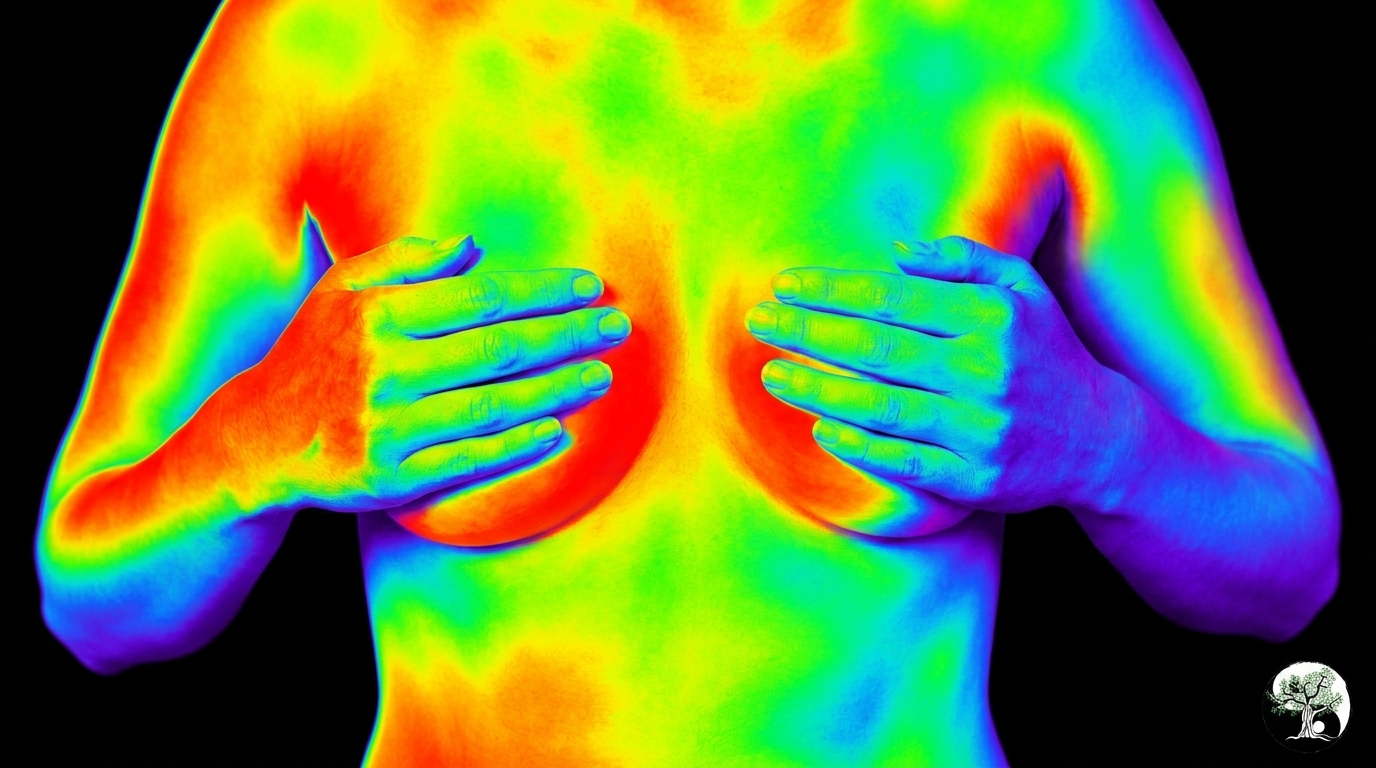
Thermography, also called infrared thermal imaging, uses a heat-sensitive camera to capture variations in skin temperature. Your skin radiates heat, and the patterns in that heat can reflect what's happening with circulation and blood flow beneath the surface.
That's a different kind of information than most imaging provides. A mammogram, an X-ray, or an ultrasound produces a picture of structure, showing what tissue looks like and where a mass or a calcification might sit. Thermography produces a picture of physiology, showing patterns of heat and circulation rather than anatomy. This visual map of the breasts helps to identify risk, ideally ahead of disease, so that you can make preventative lifestyle changes that work for your body and be able to track progress.
Neither type of information, a mammogram, ultra sound, MRI or a thermal image, replaces the other. Think of them as puzzle pieces that help you put together the most comprhensive picture of your breast health.
What the exam is like
At our center, the imaging experience is straightforward:
- No pain
- No radiation
- No squeezing or compression
- Zero contact between you and the equipment
You are never touched by the camera. The imaging happens across the room.
What a first visit looks like
If you've never had thermal imaging, the process runs in three stages.
Before your visit: You'll call the office to schedule, and we'll email your intake forms along with pre-exam instructions. Those instructions matter more than people expect, because heat is what the camera reads, and anything that changes your skin temperature can affect the images. That includes recent sun exposure, hot showers, exercise, lotions or deodorant on the area being imaged, and several other everyday things. Read the instructions carefully and follow them closely.
The day of your exam: You'll turn in your completed paperwork, and your technician will walk you through what's about to happen. The first 15 minutes are an acclimation period, where your skin temperature and the room temperature normalize so the images are as clear as possible. During imaging, you'll stand behind a curtain in front of the thermal camera while the technician captures the images. How long that takes depends on which areas are being imaged.
After your visit: Your full report, including all images, arrives by email within 7 to 10 business days. From there, you can set up a one-on-one consultation to go through the findings together and talk about any recommendations. Your report also comes with a recommended follow-up interval, since patterns observed over time are more informative than any single exam.
Where thermography fits, and where it doesn't
We want to be plain about this, because clarity here protects you. Thermography is a risk-assessment and monitoring tool. It doesn't diagnose disease, it can't pinpoint the location of a tumor, and it cannot substitute what a structural exam such and an ultrasound, MRI or mammogram can inform you of.
Thermography sits alongside that care as an additional source of information that can help motivate you to take charge of your breast health.
Scheduling and payment
Thermography appointments are scheduled by phone so we can walk you through preparation before you come in. HSA and FSA funds may be accepted, subject to current practice policies, so it's a good idea to ask when you call.
If you'd like to know more before you book, read through our process from start to finish.